Skip to content
To hydrate the beans
Components
- One kilogram of fruit beans
Ready state
- Place the raw beans in the blender and pulse briefly to crack the grains. Move them to a large bowl and add twice the amount of water. Refrigerate and let the mixture sit overnight or for a minimum of 3 hours.
for bulk
Components
- 1 kilogram of onions (approximately 5 pieces)
- One onion with its peel fried
- Two tablespoons of salt
- 2 liters of palm oil for frying
Setup phase
- Drain the water from the soaked beans and refill with fresh water. Stir gently, then use a sieve or squeeze to remove the floating skins. Stir once more and eliminate additional peels. Repeat this process three more times, then thoroughly drain the water using the sieve.
- Remove the skin from the onions and chop them into medium-sized pieces, keeping the leftover onion with the peel.
- In the food processor, blend one-fifth of the soaked beans with one-fifth of the onion until it creates a very light, spongy paste. Transfer this mixture to a bowl and repeat the process with the remaining beans and onions. Gradually incorporate the salt into the dough.
- At the same time, heat the drained oil in a deep, large pan with a whole onion inside – this helps maintain the proper temperature for frying the acarajé.
- Thoroughly mix the dough to ensure it is uniform, then shape a dumpling using two spoons of rice, transferring it back and forth between the spoons. This quenelle-making method, which creates an oval-shaped mass, demands some skill and dexterity. (The first few attempts may resemble pancakes, but don’t be discouraged—practice makes perfect.) Scoop some dough with one spoon and use the other to scrape the bottom of the first spoon. Repeat this motion three times, then immediately place the formed dumpling into the pan with olive oil.
- Fry no more than two cupcakes simultaneously, turning them to ensure even cooking. Use a skimmer to remove them and place on a heat-resistant surface lined with paper towels.
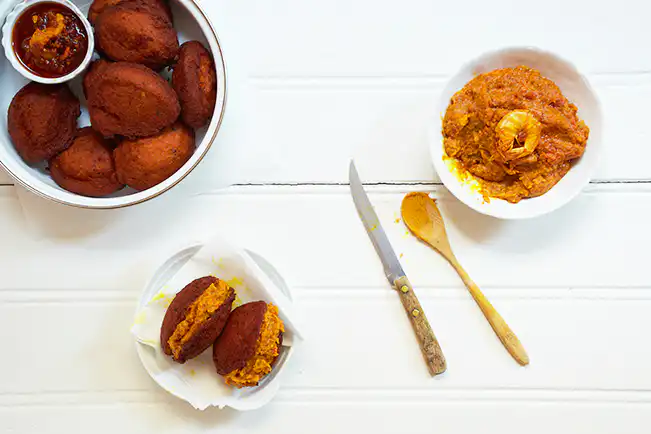
- Offer the following acarajé, halved and filled with vatapá and a sauce made from dried shrimp or chili.