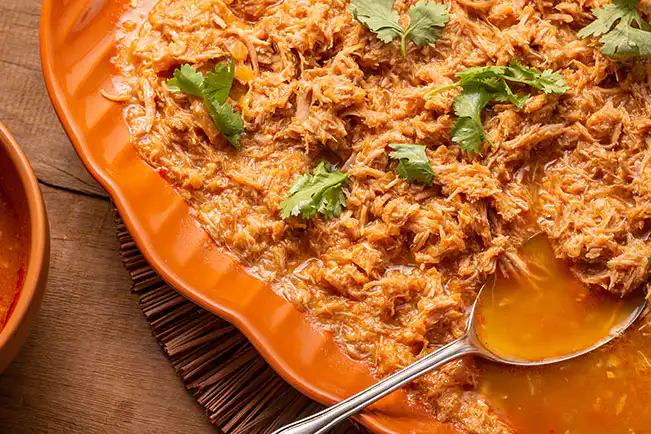
Components
- 1.5 kg of boneless pork leg
- One pineapple
- 1 red bell pepper
- 1 cup of cachaça (tea)
- Two onions
- Three garlic cloves
- 1 bell pepper
- Three tablespoons of olive oil
- Two bay leaves
- 2 tablespoons ground cumin
- One tablespoon of salt
- Add ground pepper to ground grains gradually, adjusting to taste.
- cilantro leaves as desired
Setup phase
- Take the pernil out of the refrigerator, slice it into large pieces roughly 8 cm each, and remove any excess fat (if the piece has bone, leave it attached to one of the pieces). Place it in a cross shape and season with salt, cumin, and pepper. Let it sit at room temperature while you prepare the other ingredients.
- Remove the skins and slice the pike onions and garlic cloves thinly. Rinse and pat dry the sweet pepper and pepper.
- Slice the sweet pepper lengthwise down the middle. Use the knife tip to remove and discard the seeds, then chop the pepper into cubes. Tip: To prevent irritation from spicy residue on your fingers, rub oil or olive oil on your hands after handling the peppers—capsaicin, the compound causing the burning sensation, is fat-soluble. Afterwards, wash your hands with soap to remove the oil.
- Remove the stem, seeds, and chop the pepper into large chunks. Peel the pineapple and cut it into big cubes. Place the pepper and pineapple pieces into the blender jar. Pour in the cachaça and blend until smooth. Pour the mixture through a sieve into a bowl, using the back of a spoon to press out the juice. Set aside.
- Place a 6-liter pressure pan (without the lid) over medium heat. As it heats, add water along with one tablespoon of olive oil and arrange the pieces side by side without overlapping. Let them brown for 3 minutes, turning them with a pinch to brown all sides evenly. Transfer the browned pieces to a plate and repeat the process with the remaining pieces, adding half a tablespoon of olive oil to the pan for each batch.
- Maintain the pan over medium heat and add water with half a tablespoon of olive oil. Incorporate the onion, season with a pinch of salt, and sauté for 3 minutes until it softens. Add garlic, sweet pepper, and bay leaves, stirring for an additional minute. Deglaze with pineapple juice and pepper, mixing with a spatula and scraping the bottom of the pan thoroughly to dissolve any browned bits from the meat—this will enhance the sauce’s flavor.
- Put the pieces of pernil back into the pan, cover with the lid, and turn up the heat. When it begins to whistle, reduce the heat and let it cook for 40 minutes.
- Turn off the heat and allow the steam to escape and the pan to stop bubbling. Remove the lid and place the pernil on a plate. Set aside about one-third of the sauce in a saucer or bowl to serve with the portion, while the rest will be mixed with the shredded pernil.
- Using two forks, pull apart the pork and move it to a serving dish (discard the bone if used). Alternatively, you can put the pernil pieces in a mixer and blend on low speed until the meat is shredded.
- Pour the remaining sauce over the shredded pernil and stir thoroughly. Taste and, if needed, season with salt and ground pepper. Garnish with coriander leaves and serve alongside the reserved sauce.
Is there any remaining?
Transform yesterday’s pernil into a tasty salad with mango or a delicate cabbage for the pot.